
London doesn't have one Little India — it has about fifteen, each with its own personality, its own cuisine, and its own opinions about who does the best biryani.
Southall — The Original
Southall Broadway is where it started for a lot of British Indian families. Punjabi grocers, Sikh gurdwaras, gold jewellers, sweet shops with jalebis piled in the window like edible architecture. The Glassy Junction pub — a Punjabi pub, yes that's a thing — has been pouring pints alongside pakoras since the 1960s.
Walk down The Broadway on a Saturday and you'll hear more Punjabi than English. The sari shops are still thriving. The street food stalls still sell golgappas for a quid. Southall hasn't been gentrified because the community that built it is still running it.
Get there via the Elizabeth Line to Southall station. If you're visiting for the first time, start at the Sri Guru Singh Sabha Gurdwara — one of the largest Sikh temples outside India — then eat your way south along The Broadway.
Brick Lane — Bengali Roots, Curry Mile Reputation
Brick Lane's identity has layers. Bengali families settled here from the 1970s, building the curry houses that gave the street its fame. The neon signs and restaurant touts are still there, but Brick Lane has shifted — Bangladeshi businesses now sit alongside vintage shops, galleries, and coffee roasters.
The best food isn't always on the main strip. Duck into the side streets for Bangladeshi-run cafes doing home-style cooking rather than the tourist-facing buffets. Tayyabs on Fieldgate Street (technically Whitechapel, but everyone calls it Brick Lane-adjacent) is still one of London's best Punjabi grills. The queue tells you everything.
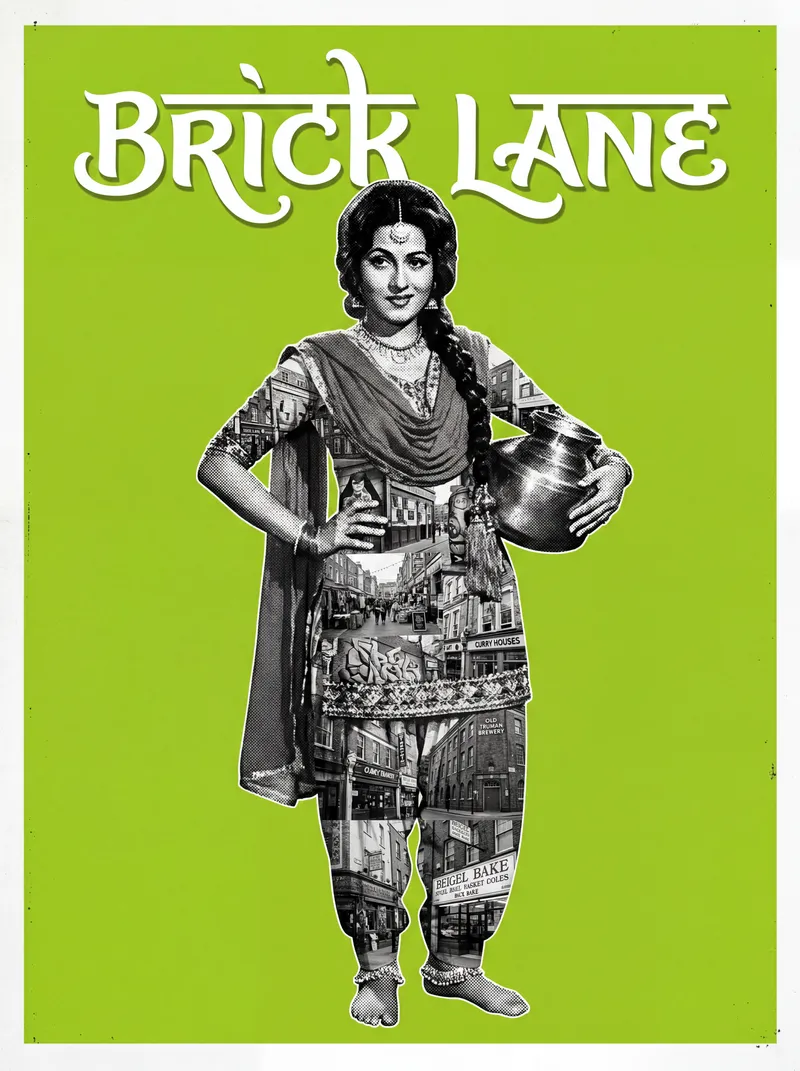
Our Brick Lane poster — available framed or unframed.
Wembley & Harrow — Suburban Desi Central
North-West London is where British Indian suburbia happens. Wembley's Ealing Road is a Gujarati food corridor — Sakonis for chaat, the sweet shops for mithai boxes before every family event, and the sari stores where your mum will spend two hours choosing fabric while you sit on a tiny stool.
Harrow has one of the highest concentrations of British Indians in the country. The temples, the community centres, the Diwali celebrations that shut down streets — this is where diaspora life is just regular life. It's not exotic, it's not curated for visitors. It's Tuesday evening at the mandir followed by samosas from the corner shop.
Tooting — South London's Spice Corridor
We've written a full guide to Tooting, but the short version: Upper Tooting Road and Tooting High Street form the best South Asian food mile south of the Thames. Sri Lankan hoppers, South Indian dosas, Pakistani lamb chops, Gujarati thalis — all within walking distance of Tooting Bec station on the Northern line.
Tooting is where young British Indians are buying flats because the food is excellent, the community is real, and the Northern line gets you to the City in 25 minutes.
The Rest of the Map
East Ham & Upton Park — Green Street is London's other great South Asian shopping street. Saris, gold, and street food rivalling Southall, with a more Gujarati and Tamil character.
Hounslow — Quieter than Southall but just as Punjabi. The restaurants here serve families who've been coming for decades, not tourists who found a list online.
Whitechapel — The Bangladeshi heartland sits just south of Brick Lane. Whitechapel Market on a busy day is as close to Dhaka as London gets.
Elephant & Castle — Growing South Asian presence alongside the Latin American community. A neighbourhood in transition with new energy.
Stratford — East London's post-Olympics boom brought new South Asian businesses alongside the established community in neighbouring Forest Gate.
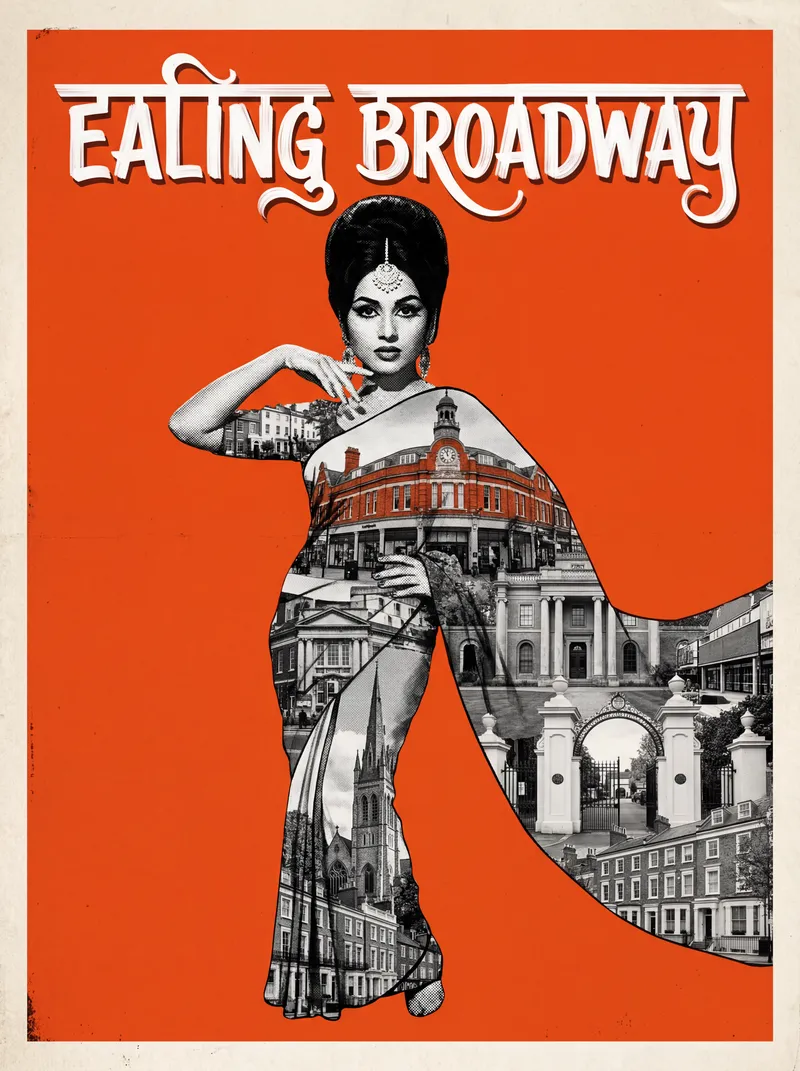
Our Ealing Broadway poster — the gateway to Southall, available framed or unframed.
Beyond London
British Indian life doesn't stop at the M25. Birmingham's Sparkbrook and Soho Road are Punjabi and Kashmiri strongholds. Leicester has the largest Diwali celebrations outside India. Manchester's Rusholme — the Curry Mile — has been feeding students and families for decades. Glasgow has a Pakistani community that's been shaping the city since the 1950s.
Pro Tip: Do the Southall-to-Tooting day trip. Elizabeth Line west to Southall for lunch, then tube across to Tooting for dinner. Two of London's best desi neighbourhoods, two totally different vibes, one very full stomach.
Which London neighbourhood has the best Indian food?
Depends what you're after. Southall for Punjabi. Brick Lane/Whitechapel for Bangladeshi. Tooting for South Indian and Sri Lankan. Wembley for Gujarati. Each neighbourhood specialises in the cuisine of the community that built it.
Is Southall worth visiting as a tourist?
Absolutely — but go with respect and curiosity rather than a camera-first attitude. Eat at the local places, visit the gurdwara (it's open to everyone and serves free langar meals), and browse the shops. It's a real community, not a theme park.
Where do most British Indians live in London?
The largest concentrations are in Harrow, Brent (Wembley), Hounslow (near Southall), Newham (East Ham/Upton Park), and Ealing. South London's Tooting and Balham also have growing communities. Overall, British Indians make up about 7.5% of London's population — over 650,000 people.