
Your nan's living room — the one with the brass figurines, stacked saris in the cupboard, framed temple prints beside family photos, and a carpet that told a better story than most Netflix shows — wasn't cluttered. It was ahead of its time.
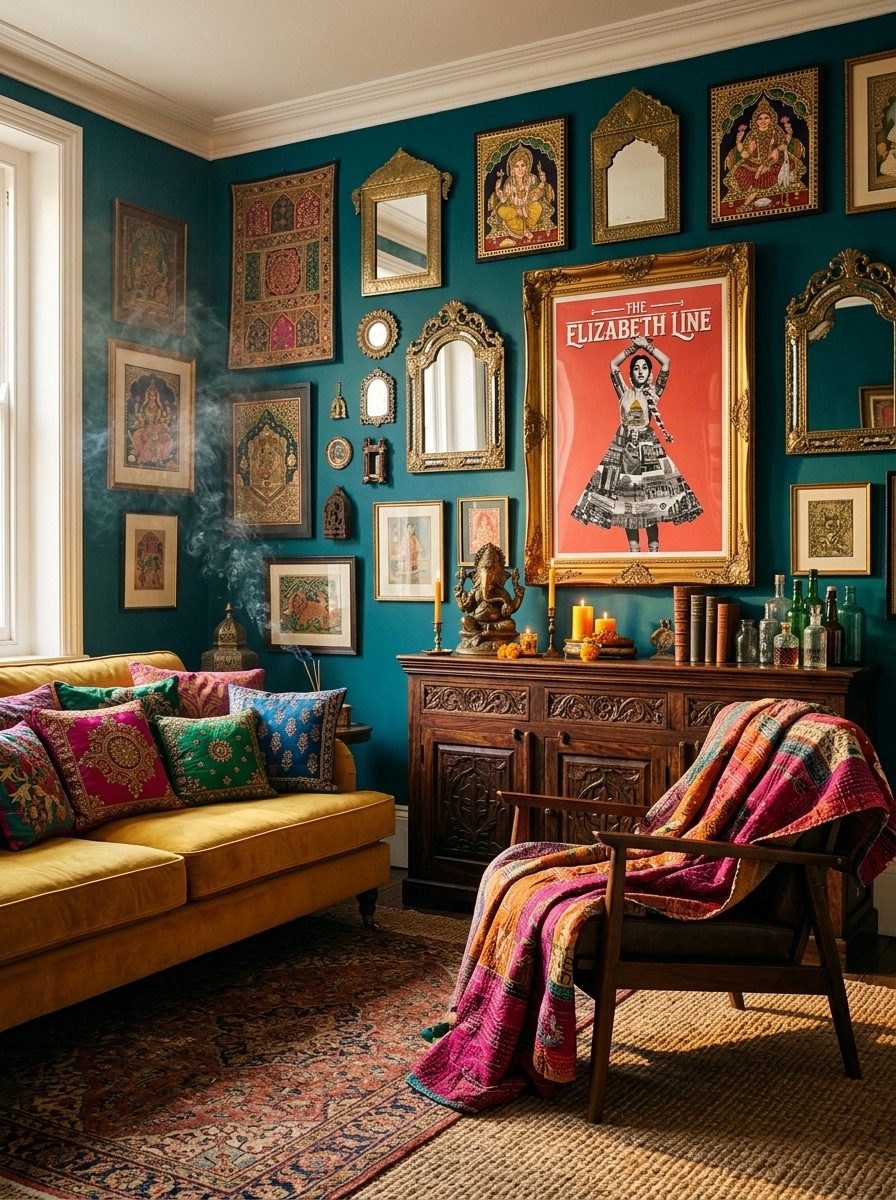
Indian maximalism in action: layered textiles, brass, mirrors, and a bold Bollywood-style poster anchoring the gallery wall.
The Beige Era Is Over
For roughly ten years, "good taste" in the UK meant white walls, one carefully placed succulent, and art so muted it could've been a screensaver. Scandinavian minimalism had a chokehold on British interiors, and the result was homes that looked stunning on Instagram but felt like waiting rooms in real life.
2026 is the correction. Colour is back. Pattern is back. Personality is back. And the culture that never lost any of those things — Indian design — is suddenly the most relevant reference point in the room.
Indian maximalism isn't a trend that just landed. It's a design language built over centuries of craft, ritual, and everyday abundance. The difference now is that the rest of the world is finally catching up.
What Indian Maximalism Actually Means
Forget the word "clutter." Indian maximalism is curated chaos — every object earns its place because it carries a story. A Banarasi throw on a modern sofa. A brass diya next to a Bluetooth speaker. A Bollywood-style poster of your favourite London neighbourhood on a wall that also holds family photos and a vintage clock.
The principles are simple:
- Layer, don't dump. Add pattern and colour in stages — rugs, cushions, textiles, then art — editing as you go.
- Mix old and new. Pair heirloom brassware with a contemporary print. A wooden jharokha mirror next to a brutalist poster frame.
- Let objects tell stories. Prioritise pieces that mean something — a poster of the neighbourhood you grew up in, a textile from a trip, a gift from your mum — over generic homeware.
- Repeat to unify. Use two or three core colours throughout so a busy room still feels intentional, not random.
This is restraint inside abundance. It's why an Indian grandmother's home feels warm and complete, while a Pinterest-perfect flat can feel hollow.
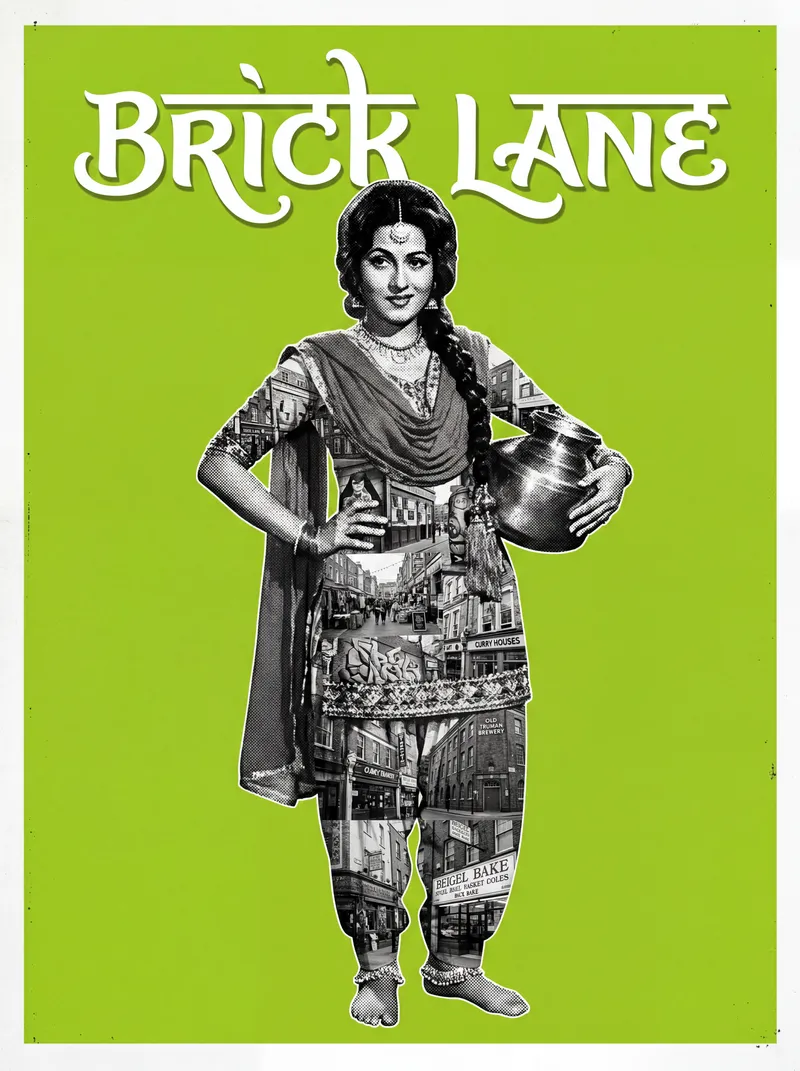
Our Brick Lane poster — East London's desi heartland, reimagined in vintage Bollywood colour.
Why It's Hitting Now
Three forces are colliding in 2026:
AI made everything look the same. Generative design tools have flooded the internet with perfectly polished but culturally empty imagery. When anyone can produce a "minimalist print" in thirty seconds, minimalism stops meaning anything. Art rooted in specific places, specific cultures, and specific memories cuts through because it can't be mass-generated — it has to be felt.
Diaspora confidence is peaking. British-South Asian culture is mainstream now — in food, music, fashion, and film. Homes are the last frontier. People are done apologising for colour on their walls or explaining why they have fifteen cushions. The maximalism they grew up with isn't something to hide; it's an asset.
The mood has shifted. Post-pandemic, people want rooms that make them feel something. "Dopamine decor" isn't just a TikTok hashtag — it's backed by research showing that personally meaningful, visually rich environments support stronger wellbeing and sense of identity. Indian homes have been doing this for generations without needing a trend name.
How Our Posters Fit a Maximalist Wall
SpicyEditions posters were built for this exact aesthetic. The saturated Bollywood-era palette — burnt orange, deep wine, marigold gold — slots into a maximalist room like it was always there. Because, in a way, it was. These colours come from hand-painted Hindi film hoardings of the 1960s and 70s, the same visual DNA that shaped the interiors many of us grew up in.
A Covent Garden poster on a story wall between family photos and a vintage textile. A Camden Town print above a shelf of brass figurines and stacked books. A Edinburgh poster in a deep-coloured hallway alongside a patterned runner and a carved wooden mirror.
The trick with maximalist walls is contrast. Our hard-edged, brutalist frames and block shadows hold their own against busy surroundings — they don't disappear into the noise. That's by design. Bollywood cinema posters were made to grab attention from across a crowded Mumbai street. They'll hold a wall in Hackney or Harrow just as well.
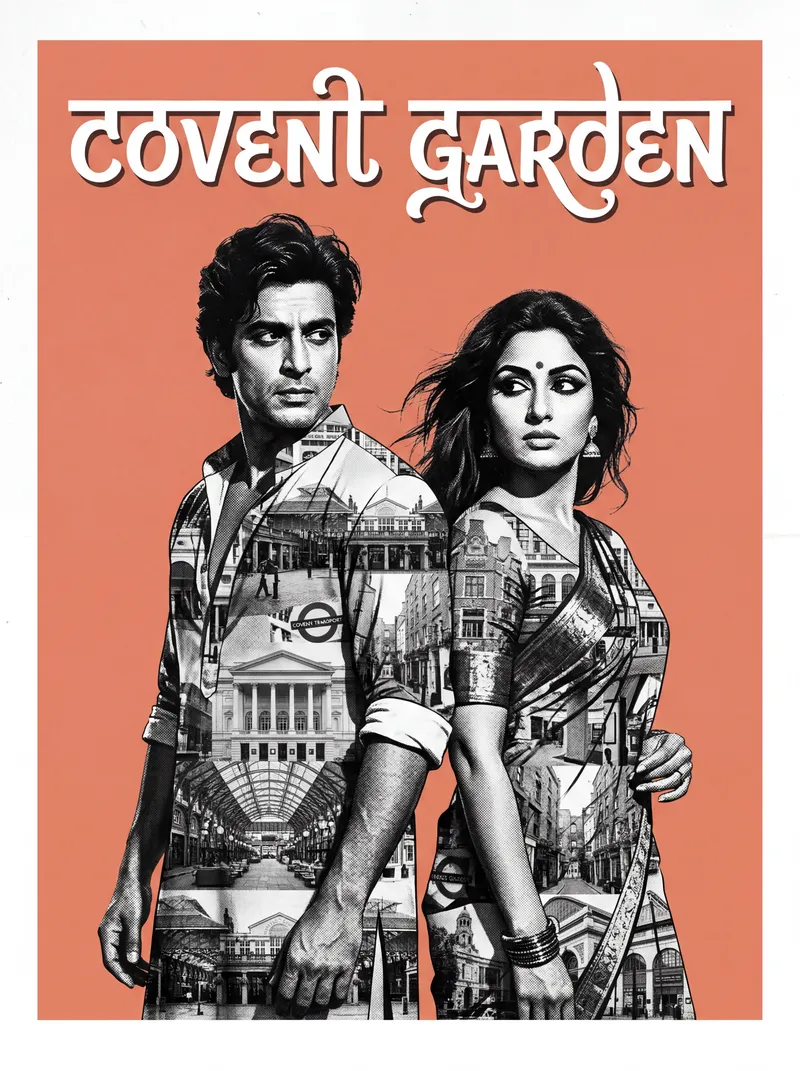
Our Covent Garden poster — available framed or unframed, built to anchor a maximalist gallery wall.
Two Scenes to Imagine (and Recreate)
Want to see how this looks in practice? Here are two room setups you can recreate at home:
Scene 1: The South London Living Room. A deep teal accent wall. Our Brixton poster (16×24", black frame) hung slightly off-centre. Below it, a low wooden console with a brass Ganesh, a stack of paperbacks, and a potted monstera. A Kantha throw draped over a mid-century armchair. On the adjacent wall, a cluster of three smaller family photos in mismatched frames. The poster's burnt orange palette pulls the whole arrangement together — the teal wall makes the colours sing.
Scene 2: The North London Hallway. A narrow Victorian hallway, original tiles on the floor. Our King's Cross poster (24×36", unframed) mounted on the wall above a slim console table. On the table: a brass tray with keys, a small potted jasmine, and a stack of vintage Bollywood film magazines. A woven jute runner on the floor. The hallway is the first thing visitors see — the poster announces what this house is about before they've taken their shoes off.
Pro Tip: When building a maximalist wall, pick your poster first and pull two colours from it — one warm, one dark — to repeat across the room in cushions, throws, and smaller objects. This gives you visual density with a thread of coherence running through it. Our posters use a consistent wine-and-orange palette, which makes mixing multiple SpicyEditions prints in one space surprisingly easy.
Start With One Wall
You don't need to redecorate an entire flat. Indian maximalism works room by room, wall by wall, object by object. Start with one "story wall" — a poster that means something to you, surrounded by pieces you already own. The brass your mum gave you. The textile from that Jaipur trip. The photo from your mate's wedding.
That's the whole point of this movement. It's not about buying more stuff. It's about showing what you've already got instead of hiding it in a drawer because someone on the internet said clean lines were superior. More was always more. 2026 just finally agrees.
What is Indian maximalism in interior design?
Indian maximalism is a design approach rooted in centuries of South Asian craft, ritual, and everyday living. It embraces layered colours, mixed patterns, textiles, heirloom objects, and art that carries cultural or personal meaning — curated abundance rather than random clutter. Think dense but intentional rooms where every piece tells a story.
How do I start decorating in an Indian maximalist style without it looking messy?
Start with one wall and build outward. Choose a statement piece of art, then layer objects you already own — textiles, family photos, brass, books — around it. Stick to two or three core colours repeated across the room. The key is adding in stages and editing as you go, not throwing everything up at once.
Can Indian maximalism work in a small UK flat?
Absolutely. Maximalism isn't about volume or size — it's about density of meaning. A single bold poster, a patterned rug, and a few personal objects on a shelf can make a small room feel warmer and more characterful than a large, empty one. The trick is vertical layering (art, shelves, textiles) rather than floor clutter.