
Desi maximalism is the reason your nan's living room had more visual interest than any Scandinavian interior blog you've ever scrolled past.
So What Actually Is It?
Desi maximalism is a design approach rooted in South Asian visual culture. It starts from a simple premise: more is more. Bold colour, layered pattern, rich texture, and the complete rejection of the idea that a room needs to be "calming" to be beautiful.
The term covers a broad tradition. Bollywood film sets where every surface is decorated. Rajasthani havelis with hand-painted walls from floor to ceiling. Pakistani truck art where every panel is covered in roses, tigers, and calligraphy. Tamil temple gopurams stacked with hundreds of painted figures. Gujarati embroidery so dense you can't see the base fabric.
What ties it together isn't a single style — it's an attitude. Abundance as celebration. Decoration as meaning. Colour as confidence.
Where You Already See It
If you grew up in a British Indian household, you've lived inside Desi maximalism your whole life. The brass ornaments on the mantelpiece. The embroidered cushion covers your mum brought back from India. The wall calendar with Hindu deities next to family photos in mismatched frames. None of it "coordinated" in the IKEA sense, all of it working together through sheer accumulated personality.
Outside the home, look at Southall Broadway. Brick Lane's neon signs. Any Indian sweet shop window display. The colour and density aren't accidental — they're the point.
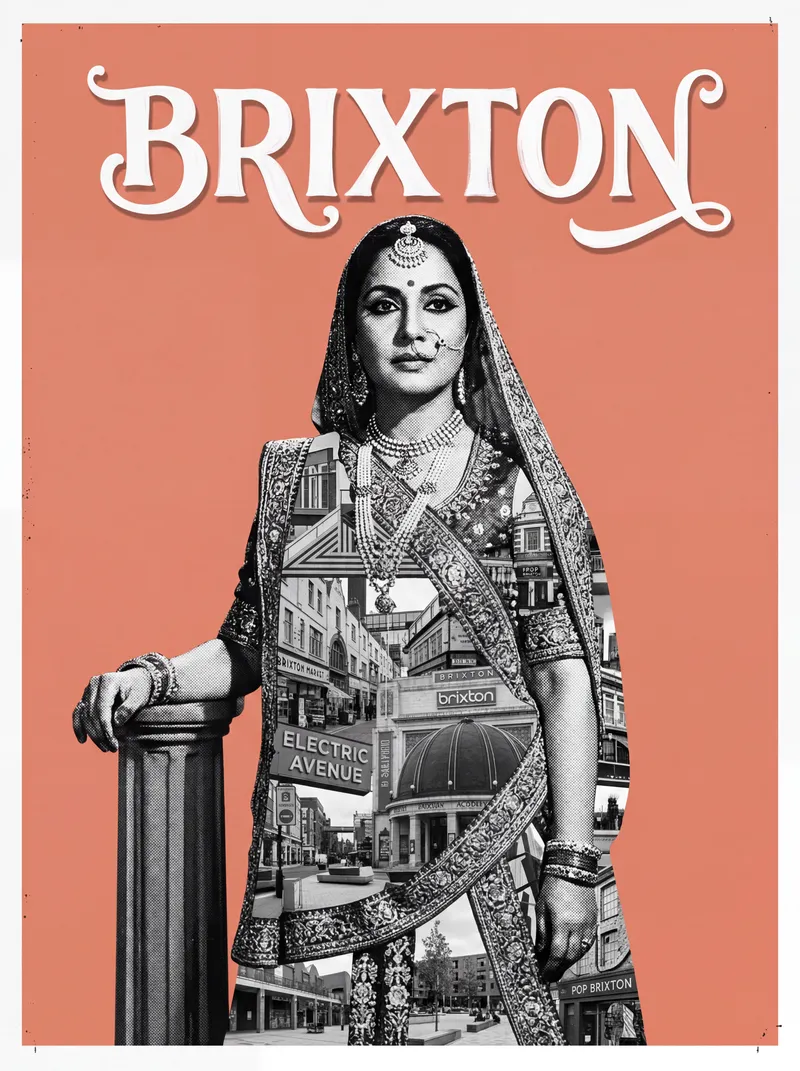
Our Brixton poster — South London energy in Desi maximalist style.
Why It Works in UK Homes
British homes tend towards the muted. Magnolia walls, grey sofas, one sad print above the fireplace. Desi maximalism cuts through that like a sitar riff in a quiet room. A single bold piece of wall art — the right colours, the right energy — can anchor a whole space without you having to redecorate everything.
That's the entry point for most people. You don't need to commit to painting every wall. Start with one piece that has genuine visual weight. A Camden Town poster in saturated Bollywood colours on a plain wall does more work than three "tasteful" prints from a department store.
The trick is confidence. Desi maximalism doesn't apologise for being loud. Neither should your walls.
How Bollywood Cinema Posters Fit In
The golden age of Indian hand-painted film posters — roughly 1950s through 1980s — is peak Desi maximalism in print form. Every poster was a single-sheet artwork: saturated colour, dramatic figures, hand-lettered titles, and composition that filled every centimetre of space. Films like Sholay, Mughal-e-Azam, and Don had poster art that was as memorable as the films themselves.
At SpicyEditions, we take that same visual language and apply it to UK locations. Piccadilly Circus rendered like a Bollywood premiere. Edinburgh reimagined as a Hindi epic. The result is wall art that brings Desi maximalism into your home through a style that already carries decades of cultural weight.
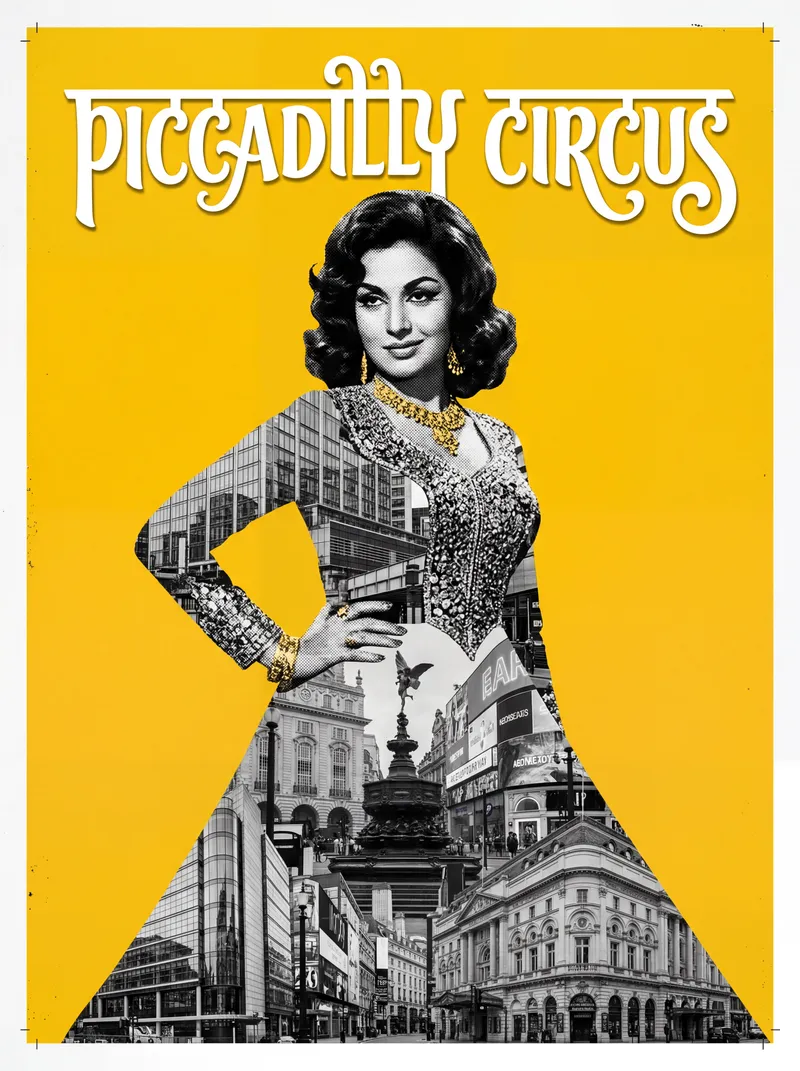
Our Piccadilly Circus poster — West End neon in Desi maximalist form.
Getting Started Without Going Full Haveli
You don't need to redecorate. Desi maximalism works in degrees:
- One bold poster on a plain wall — instant focal point, zero commitment
- A pair of prints on either side of a doorway or above a sofa — creates a statement without overwhelming
- A gallery wall mixing Bollywood-style prints with family photos and textile pieces — the full expression
The key is picking pieces with genuine visual density — not generic "ethnic" patterns from a high street chain, but art that comes from a real tradition and has something to say.
Pro Tip: Frame your poster in a black frame against a white wall. The contrast between the minimalist frame and the maximalist art is where the magic happens. It's the visual equivalent of wearing a sharp suit to a Bollywood dance sequence — the restraint makes the colour hit harder.
What does Desi maximalism mean?
Desi maximalism is a design philosophy rooted in South Asian culture that embraces bold colour, layered pattern, rich ornamentation, and visual abundance. It draws from Bollywood cinema, temple architecture, textile traditions, and street art — the belief that more is more and decoration is a form of celebration.
How do I add Desi maximalism to a rented flat?
Start with wall art. A single Bollywood-style poster in a bold frame makes an instant statement without permanent changes. Add embroidered cushions, a colourful throw, or brass ornaments to build from there. Everything removable, nothing that needs landlord permission.
Is Desi maximalism the same as Indian decor?
Not exactly. Desi maximalism is a design attitude — bold, layered, colour-confident — that comes from South Asian visual culture broadly. It includes Indian, Pakistani, Bangladeshi, and Sri Lankan traditions. It's the underlying principle rather than a specific regional style.