
A studio lives or dies on how it feels the moment someone walks in. Bare walls read as a hired hall; the wrong clutter reads as a jumble sale. Here's the middle path.
Decide what each wall is for
Walk the room as a student would. The wall you face from the mat wants something calm to rest the gaze on. The entrance wall sets the tone and is where your branding earns its keep. The side walls are background — keep them quiet so the space doesn't feel busy mid-practice.
Pick one palette and repeat it
Nothing makes a room feel more considered than a single colour story running through it. A warm, grounded palette — saffron, terracotta, deep wine — reads as calm-but-alive, and it photographs well for the class shots that fill your feed. Choosing art from one series, like our asana prints, does the coordinating for you.
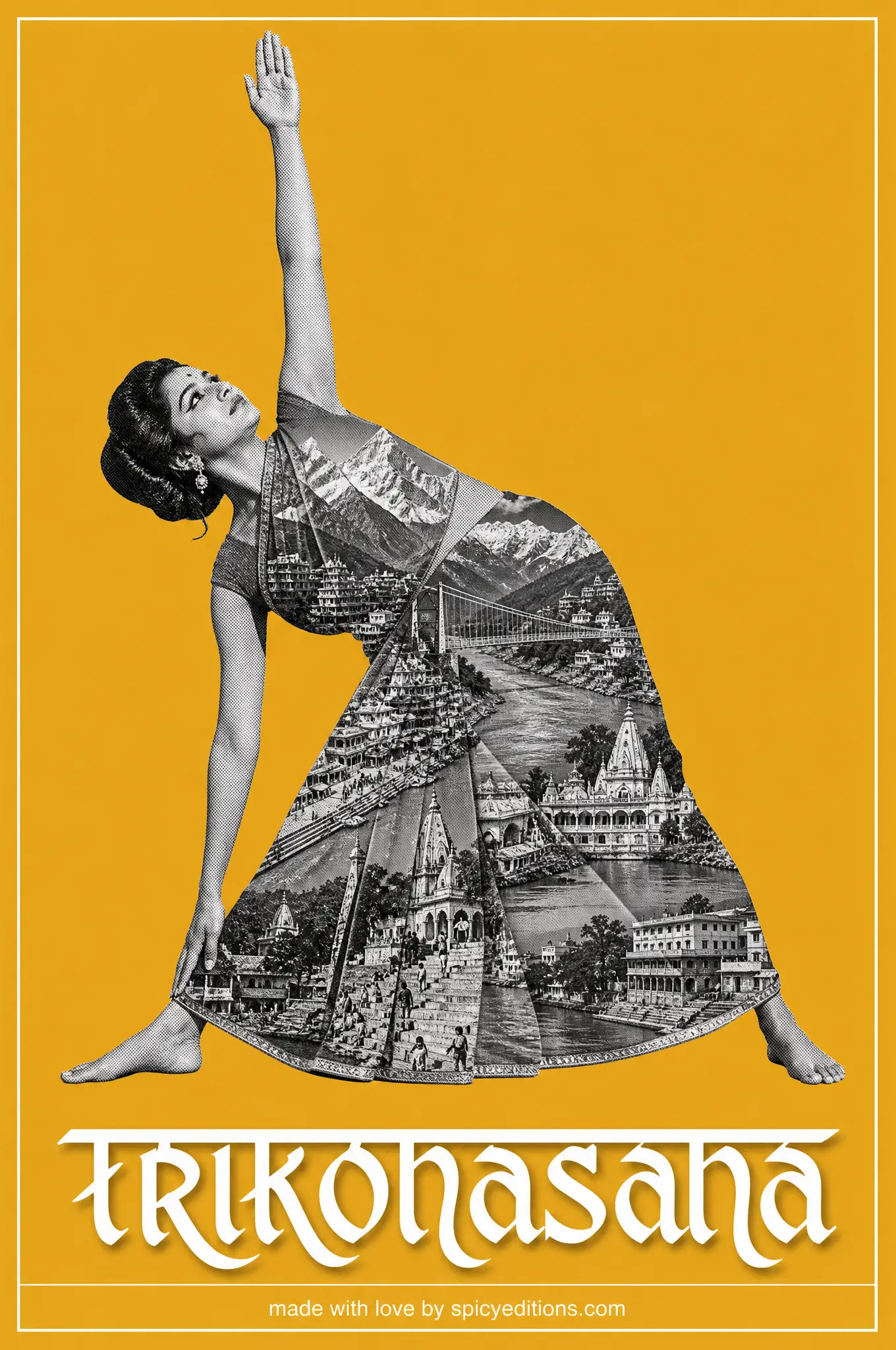
Our Triangle print — one pose, one clean focal point.
Go big at the front
The focal wall is the one place to be bold. A single large print — 24×36" — reads from the back row and gives a class somewhere to settle their eyes during a long hold or a closing rest. One statement piece beats a scatter of small frames every time, and it's far less to keep straight and dusted.
Build a sequence wall
Down a side wall or a corridor, a row of poses hung in flow order doubles as quiet instruction — Warrior II, Triangle, a balance, a seated pose, a rest. Students read it without thinking, and it ties the room together as a set rather than a collection of odds and ends.
Light it, don't just decorate it
Art only works if you can see it kindly. Warm, dimmable light flatters both the prints and the people, where cold overhead strip lighting flattens everything and kills the mood. A couple of soft lamps or wall lights near the focal piece do more for the atmosphere than another frame ever will — and they let you drop the lighting right down for a closing rest.
Pro Tip: Leave the wall directly behind the teacher's mat clear, or nearly so. Anything busy there competes with you for attention while you demonstrate. Negative space is part of the design.
Don't fill every wall
Restraint reads as calm. A strong focal piece, a sequence wall and a clean entrance is plenty — leave the rest to breathe. Browse the full series to pick a palette-matched set, and remember a trio of prints already reads as a deliberate collection.
What art works best in a yoga studio?
Calm, cohesive pieces in one palette — single asanas, abstract warmth, or natural imagery — beat a mix of unrelated prints. The goal is a room that feels intentional and doesn't compete with the practice.
Where should I hang art in a studio?
A bold focal piece on the wall students face, a sequence or set down a side wall or corridor, and branding at the entrance. Keep the wall right behind the teacher's mat mostly clear so it doesn't pull focus during demonstrations.