
There are three Warrior poses, they share a name, and almost everyone mixes them up. Here's the quick way to tell them apart and use each one well.
Who was the warrior?
All three are Virabhadrasana, named after Virabhadra — a fierce warrior the god Shiva created from a lock of his own hair. The name joins vira (hero) and bhadra (friend). The Roman numeral just tells you which of the three variations you're in, and there's a loose logic to the order: each asks a little more of your balance than the last.
Warrior I — squared and lifted
Warrior I faces the front of the mat. The back foot turns in around 45°, the hips square forward, the front knee bends over the ankle, and the arms reach overhead. It's the most front-facing of the three and a strong opener for the chest, hip flexors and shoulders. The hardest part is squaring the hips while the back leg wants to twist the pelvis open — shorten your stance a touch and draw the back hip forward to fix it.
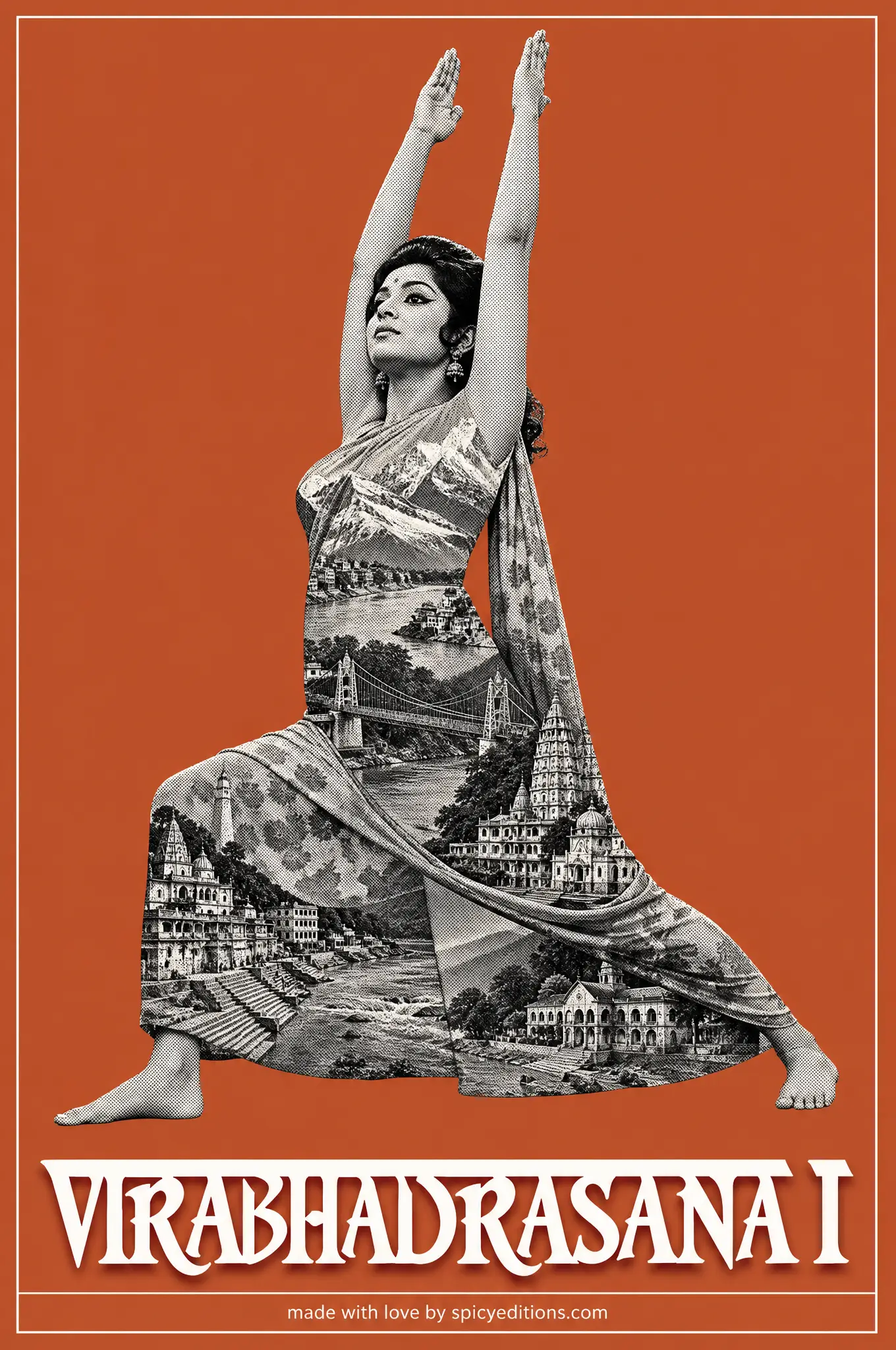
Our Warrior I print — squared hips, arms reaching up.
Warrior II — open to the side
Warrior II is the one everyone pictures: the torso and hips open to the long edge of the mat, arms reaching front and back at shoulder height, gaze over the front fingertips. It builds serious leg stamina, which is why teachers hold it longer than most standing poses. Keep the front knee tracking over the middle toes so it never caves inward, press the outer edge of the back foot down, and sink the hips down rather than leaning forward over the front leg.
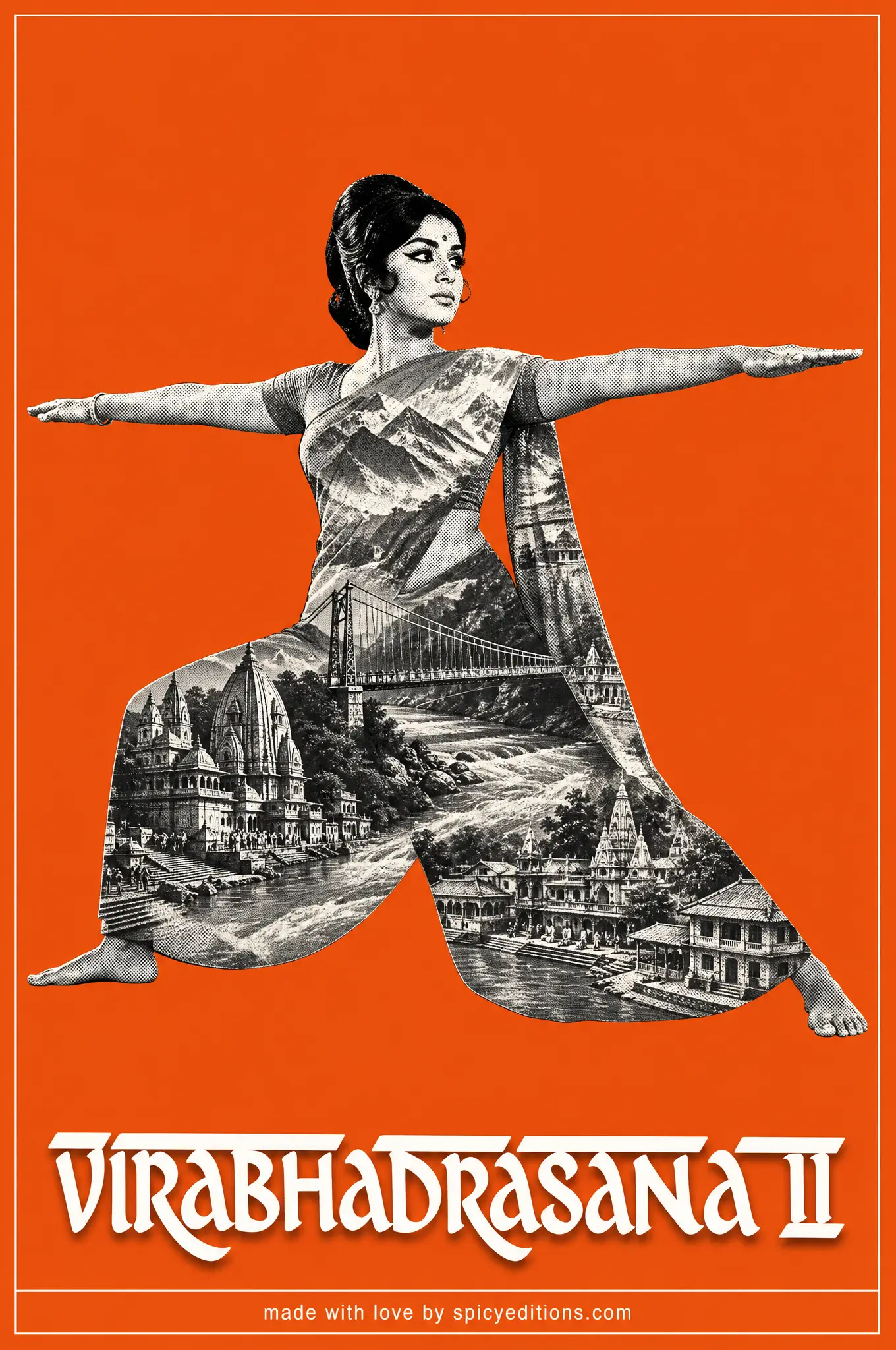
Our Warrior II print — the pose everyone pictures when they picture yoga.
Warrior III — the balance
Warrior III is a different animal: you balance on one straight leg with the torso and back leg lifted to horizontal, the body one long line like an arrow. It demands balance, a strong standing leg and squared hips — the lifted hip wants to open upward, and keeping it level is most of the work. Practise it with hands on a wall or blocks under the hands to learn the shape before going hands-free, and keep a soft micro-bend in the standing knee rather than locking it.
The one-line cheat sheet
- Warrior I — faces front, hips square, arms up.
- Warrior II — opens to the side, arms parallel to the floor.
- Warrior III — balances on one leg, body horizontal.
Pro Tip: Warm the hips and hamstrings first — a few Low Lunges and Downward Dogs — so the legs are ready to hold the Warriors without the knees or lower back compensating.
Why hold them at all?
The Warriors are where a lot of yoga's leg strength, stamina and focus get built. Held for several breaths, they teach you to stay steady and keep breathing while the legs work — a skill that carries into every harder pose. They also open the hips and chest, which counters a day spent sitting.
Putting them together
The three flow naturally as a set: open from Warrior I to Warrior II, then tip forward into Warrior III. Practised in sequence they build the leg strength and balance the rest of a standing practice leans on. See all three in the asana series.
What's the main difference between Warrior I and Warrior II?
Warrior I faces the front of the mat with the hips squared and the arms overhead; Warrior II opens to the side with the arms parallel to the floor and the gaze over the front hand. One is front-facing, the other side-facing.
Which Warrior pose is hardest?
Warrior III for most people — balancing on one leg with the body horizontal asks for strength and stability at once. Warrior I and II are more accessible and a sensible place to build up from.