
There are thousands of named yoga postures and only about eight kinds of them — once you can spot the family, an unfamiliar pose stops being a surprise.
What are the eight families of yoga poses?
Yoga poses are usually grouped into eight families: standing, balance, seated, forward folds, backbends, twists, inversions and rest. The grouping follows what the shape asks of your spine and where your weight goes, not how hard the pose is. Most classes pull from several families in a deliberate order.
- Standing — weight in the feet, legs working: Mountain, Warrior II, Triangle.
- Balance — the base narrows to one foot or two hands: Tree, Dancer, Crow.
- Seated — hips on the floor, spine long: Easy Seat, Lotus, Boat.
- Forward folds — spine flexes, back body lengthens: Standing Forward Fold, Garland.
- Backbends — spine extends, front body opens: Cobra, Camel, Wheel.
- Twists — spine rotates on its own axis: Seated Twist, Revolved Triangle.
- Inversions — hips or heart above the head: Downward Dog, Headstand.
- Rest — nothing held, the body fully supported: Child's Pose, Corpse Pose.
Schools draw the lines differently — some split arm balances out, some treat prone poses separately. Eight is the version most teachers work from, and how we sorted our own 52-pose series.
Standing poses: the base everything else stands on
Standing poses put your weight through your feet and ask the legs to hold a shape while the breath stays steady. Tadasana looks like doing nothing and is the reference point for the whole family — feet grounded, spine stacked, shoulders quiet. Warrior I and II, Triangle and Chair sit here, all approachable on your first day.
Balance poses: one leg, one point, one breath
Balance poses shrink your base of support to a single foot or a pair of hands. Where you look matters more than grip — fix your gaze on an unmoving point instead of clawing with your toes. Tree is the gateway. Dancer adds a backbend, Half Moon adds rotation, and Crow moves it all into your hands.
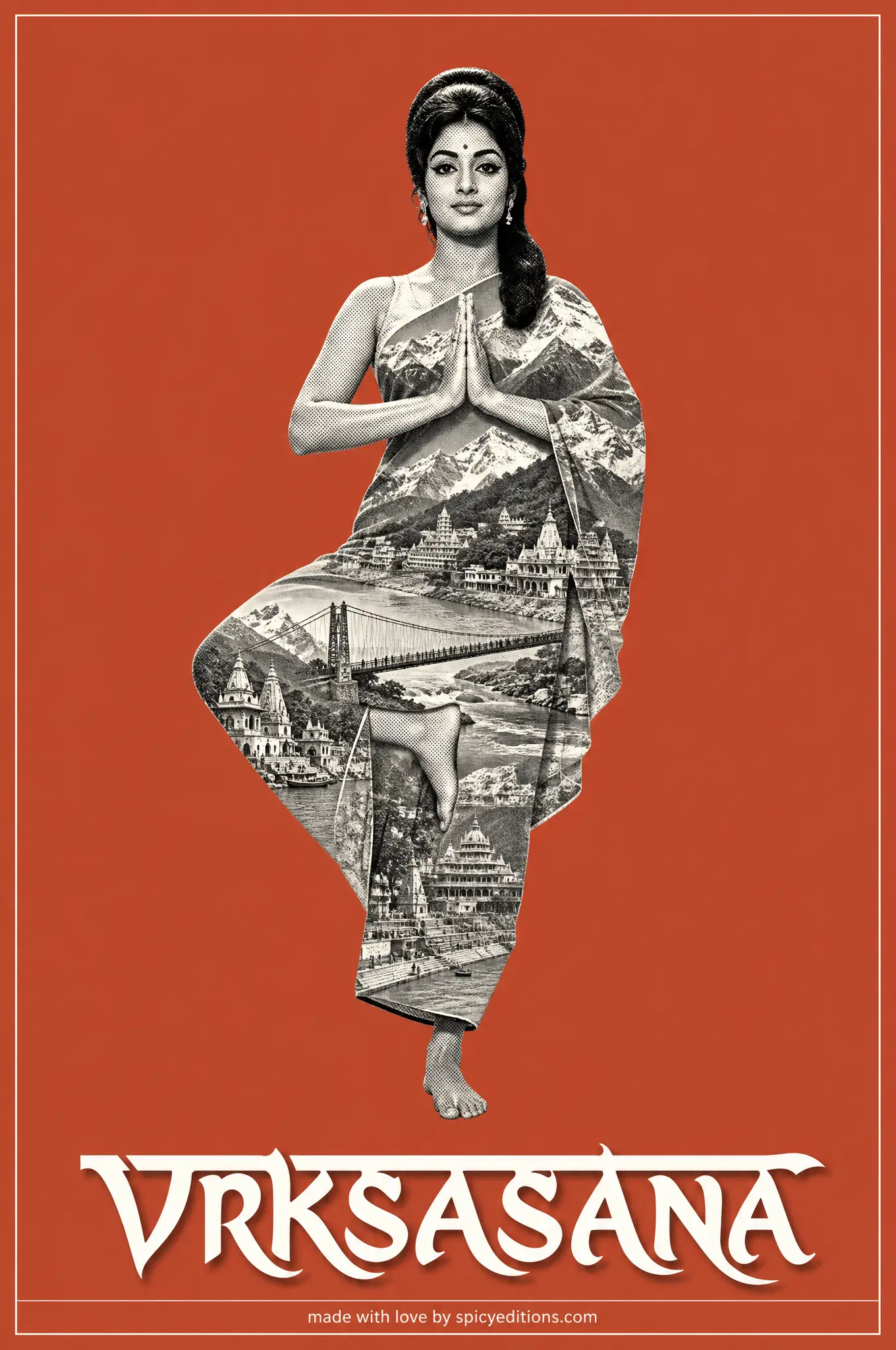
Vrksasana. Our Tree Pose print — part of the 52-pose asana series.
Seated poses and forward folds: the quiet half
Seated poses bring you to the floor with the spine long — Easy Seat for breathing practice, Staff Pose as the seated Mountain, Boat when the core needs a say. Forward folds hinge that long spine over the legs — the fold at the hips is the point, not the distance your fingers travel; rounding from the waist gets you a lower photograph and a worse stretch. Seated Forward Fold and Pigeon reward patience.
Backbends: opening the front of the body
Backbends extend the spine and stretch everything along the front — chest, hip flexors, thighs. They're the counterweight to a life spent leaning over a desk, which is why they feel so good and are so easy to overdo. Cobra and Bridge are the gentle end; Camel and Wheel want a warm spine and open shoulders first.
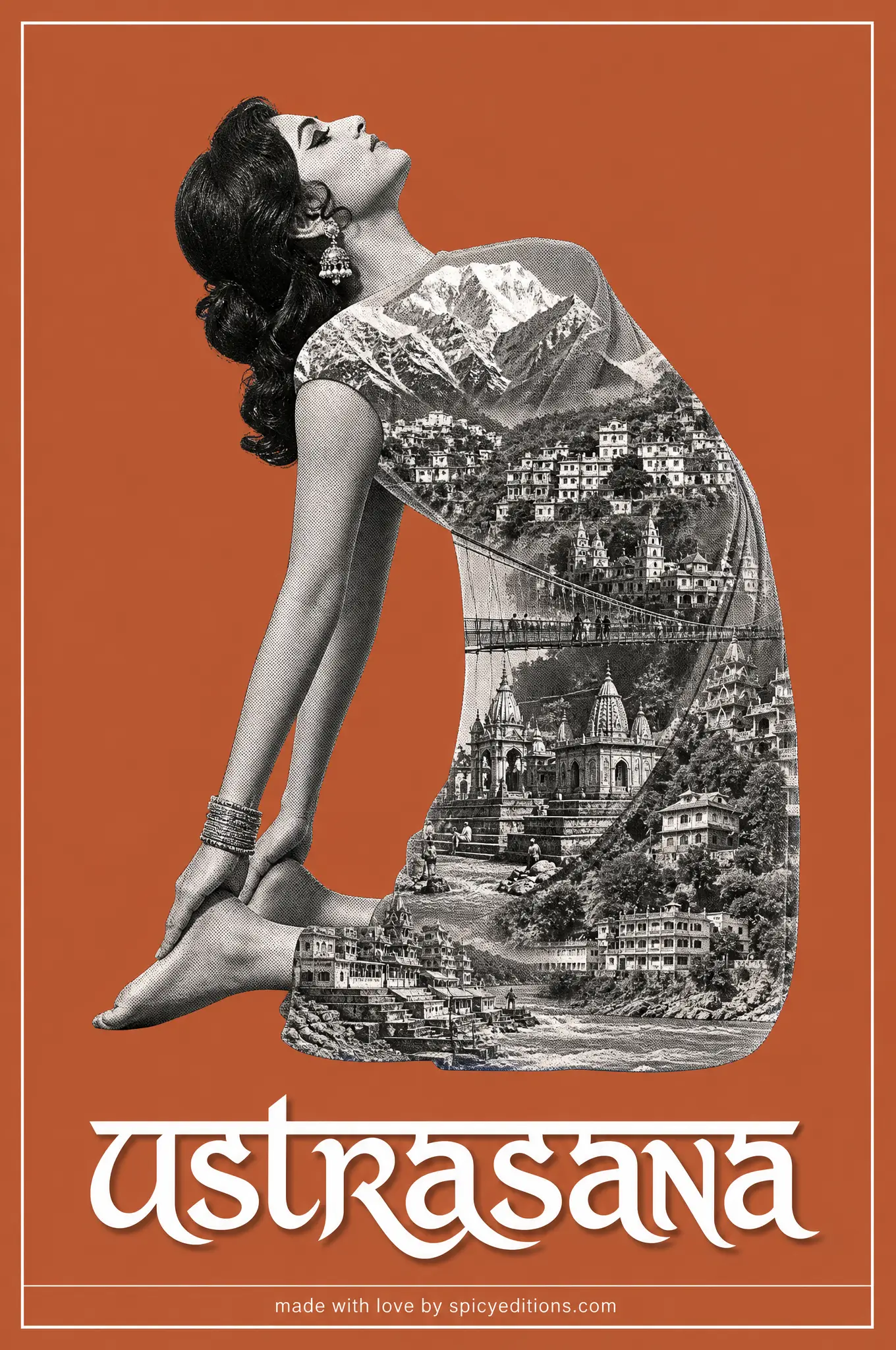
Ustrasana. Our Camel Pose print — one of eight backbends in the series.
Twists and inversions: the two that change your view
Twists rotate the spine around its long axis. One rule saves most people trouble: lengthen upward first, then rotate, so you're turning a tall spine rather than cranking a slumped one. Reclining Twist is the easiest way in; Revolved Triangle is genuinely hard.
Inversions put your heart or hips above your head, which covers far more than Headstand. Downward Dog is an inversion, and so is Legs-Up-the-Wall, which asks nothing of you but a wall and five minutes. Shoulderstand and Headstand are worth learning with a teacher watching rather than from a video.
Rest poses: where the practice actually lands
Rest poses hold nothing. The floor or a prop supports the body, and the work is letting go. Child's Pose is the mid-practice reset; Reclining Bound Angle softens the hips on the way down. Savasana closes almost every class — skipping it to beat the traffic is the most common mistake in yoga; those minutes let the nervous system absorb the last hour.
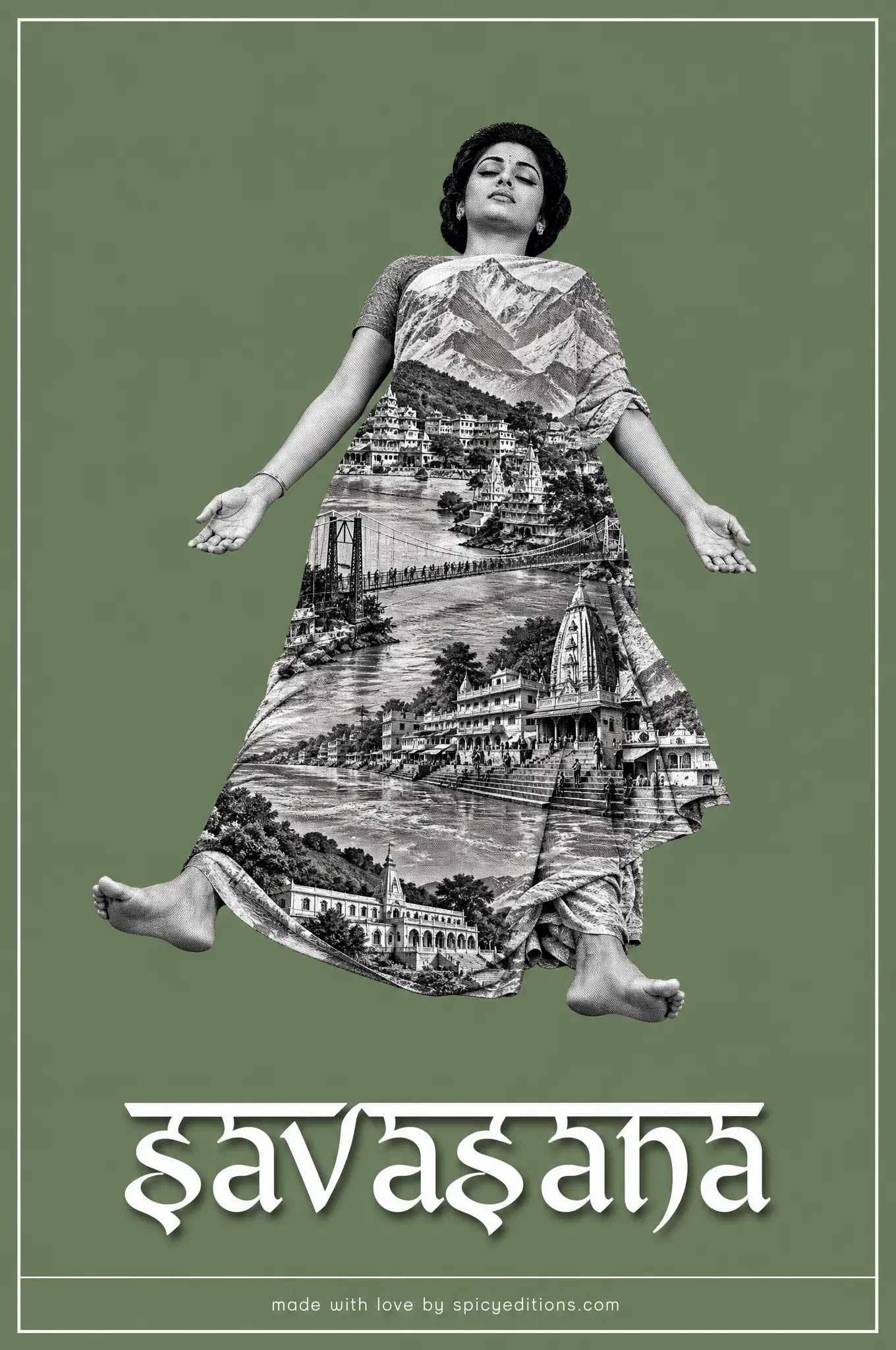
Savasana. Our Corpse Pose print — the one every class ends on.
Pro Tip: After a deep backbend, don't dive straight into a deep forward fold to "even it out". Give the spine something neutral first — a few breaths lying flat, or a gentle twist — then fold. Slamming between extremes is where most low-back grumbles come from.
How to build a practice from the eight families
A well-made class moves through the families in one arc: gentle opening, standing, balance while you're warm but not tired, then the floor — backbends, twists, folds — with inversions near the end and rest to close.
Knowing that arc tells you why Tree comes before Crow, and what to do with twenty minutes and no plan — pick one pose from four families, in that order. Browse the full asana series to see all 52 sorted by family.
How many types of yoga poses are there?
Most teachers work with eight families: standing, balance, seated, forward folds, backbends, twists, inversions and rest. Some schools split them further, separating arm balances or prone poses into their own groups, so you'll see counts between six and ten depending on the lineage.
What order should yoga poses go in?
Gentle warm-up, then standing poses, then balance work while you're warm, then floor poses — backbends, twists and folds — with inversions near the end and rest to close. The arc moves from waking the body up to settling it down.
Which family should a beginner start with?
Standing poses and rest poses. Mountain, Warrior II and Triangle build the leg strength and steadiness everything else draws on, and Child's Pose plus Savasana teach you how to stop. Balance and inversions are easier once those two are familiar.